
Deadlifting Again After Low Back Pain: A Programming Approach
If you've ever tweaked your back deadlifting, your first instinct was probably to stop lifting altogether. Maybe someone told you your back was "out," your disc slipped, or you should avoid deadlifts forever.
For most lifters, that's not the right approach.
There are situations where you need to decrease load, but the goal isn't to eliminate spinal loading forever. It's about finding a tolerable starting point, then progressively scaling back to the movements that matter.
Here's how to work your way back to deadlifting, the mistakes that slow people down, and when it's time to get checked out by a professional.
A quick note before we get into it: this is written for lifters who already have some training experience under their belt. If you're new to lifting altogether, the principles still apply, but you'll want a coach guiding the specifics.
1. Should You Stop Deadlifting?
So when's the right time to actually stop? If your pain is above a 4/10, step away from the barbell. Your spine is giving you feedback that it's either not loaded correctly or not prepared for the task yet. That's information, not necessarily a sign of structural damage. Pain can show up whether or not there's an underlying pathology, and either way, the plan looks similar. What changes is how long the rehab takes.
If your pain is sporadic, more like "it hurts sometimes," that's a different situation. In that case, keeping deadlifts in your program is usually the smarter move.
2. Understand Your Symptoms
Pain tells a story, and if you pay attention, you can usually make sense of it. Does it only show up during deadlifts? Is it load-dependent? Do certain variations feel better than others? Does it flare up the next day instead of during the lift itself?
These questions point you toward one of two problems: a load management issue or a movement quality and strength issue. Most lifters are dealing with some mix of both. Too much load, too soon, on a body that isn't prepared for it, all held together by a belt and a prayer.
If that sounds familiar, the check engine light is on. Your car isn't totaled. You just need to run some diagnostics. It'll be a challenge, but it doesn't have to be complicated.
3. Find Your Starting Point
So how do you find your starting point? The first step is likely going to be establishing pain-free hinging. There are a hundred other exercises besides deadlifts that can improve your hinge pattern. The lowest point of entry might just be walking.
Walking is one of the most underrated tools for back pain, and I use it with almost every client dealing with it.
Here's why it works. Walking puts your spine through a slow, repetitive range of motion without loading it in a way that provokes symptoms. Your hips flex and extend, your thoracic spine rotates a little with each stride, and your lower back gets gentle movement instead of sitting locked in one position all day. Most back pain gets worse from stillness, not from activity. Sitting for hours, avoiding movement because you're scared of a flare-up… that's what keeps people stuck. Walking breaks that cycle.
It also drives blood flow to the tissues around your spine. More blood flow means more nutrients getting to discs, joints, and muscles that need to recover. You're not going to out-walk a real structural issue, but for the garden-variety non-specific low back pain that most lifters deal with, walking is doing real work in the background while feeling completely unthreatening to your nervous system.
The other piece is confidence. When your back hurts, your brain gets protective, and your movement gets guarded. Walking is low enough intensity that you can do it pain-free almost every time, and that builds trust that your back can handle load and motion again. That trust matters just as much as the physical adaptation. I have athletes walk daily during a flare-up, not as a replacement for training, but as the foundation that lets everything else start working again.
4. Rebuild Capacity
So what's next? You've spent time creating space to move, and your pain should have dropped some. Your body isn't stuck in fight or flight anymore, and you're not walking around like a plank of wood. The next step is rebuilding capacity: strengthening the trunk, hips, hamstrings, and erector spinae, the muscles that hold up an anti-glass spine.
Here are my go-to movements for each muscle group to get your body ready to start ripping deadlifts again.
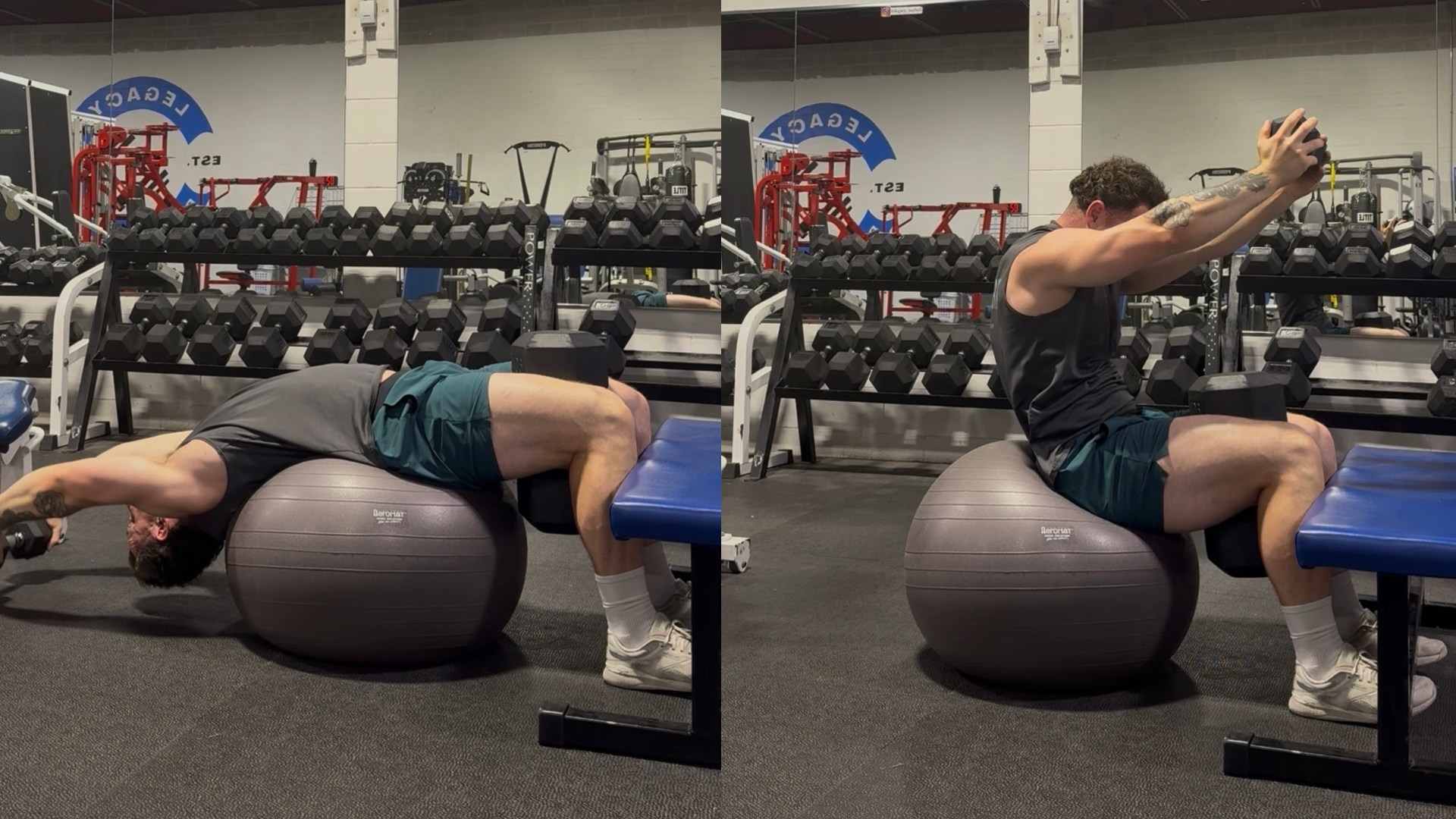
Trunk: The Swiss ball sit-up is my favorite exercise for reintroducing spinal flexion and extension with support. The Swiss ball cradles the spine while you load the flexors like the abs through a full range of motion. It’s easily progressed, and most gyms have this equipment. A bosu ball or GHD can also work to mimic the position.
The second trunk exercise I use is the cable side bend, mainly for the obliques. Think of your obliques as your built-in weight belt. They wrap around your torso, create abdominal pressure, and help stabilize your spine under heavy loads. Build strength and range of motion here, and you're on your way to a more resilient spine.
Hamstrings: we want exercises that shift your weight back. Most people dealing with low back pain get stuck with their weight shifted forward. The seated leg curl biases a posterior pelvic tilt at the hip while strengthening the hamstrings, which carries over directly to your ability to hinge.
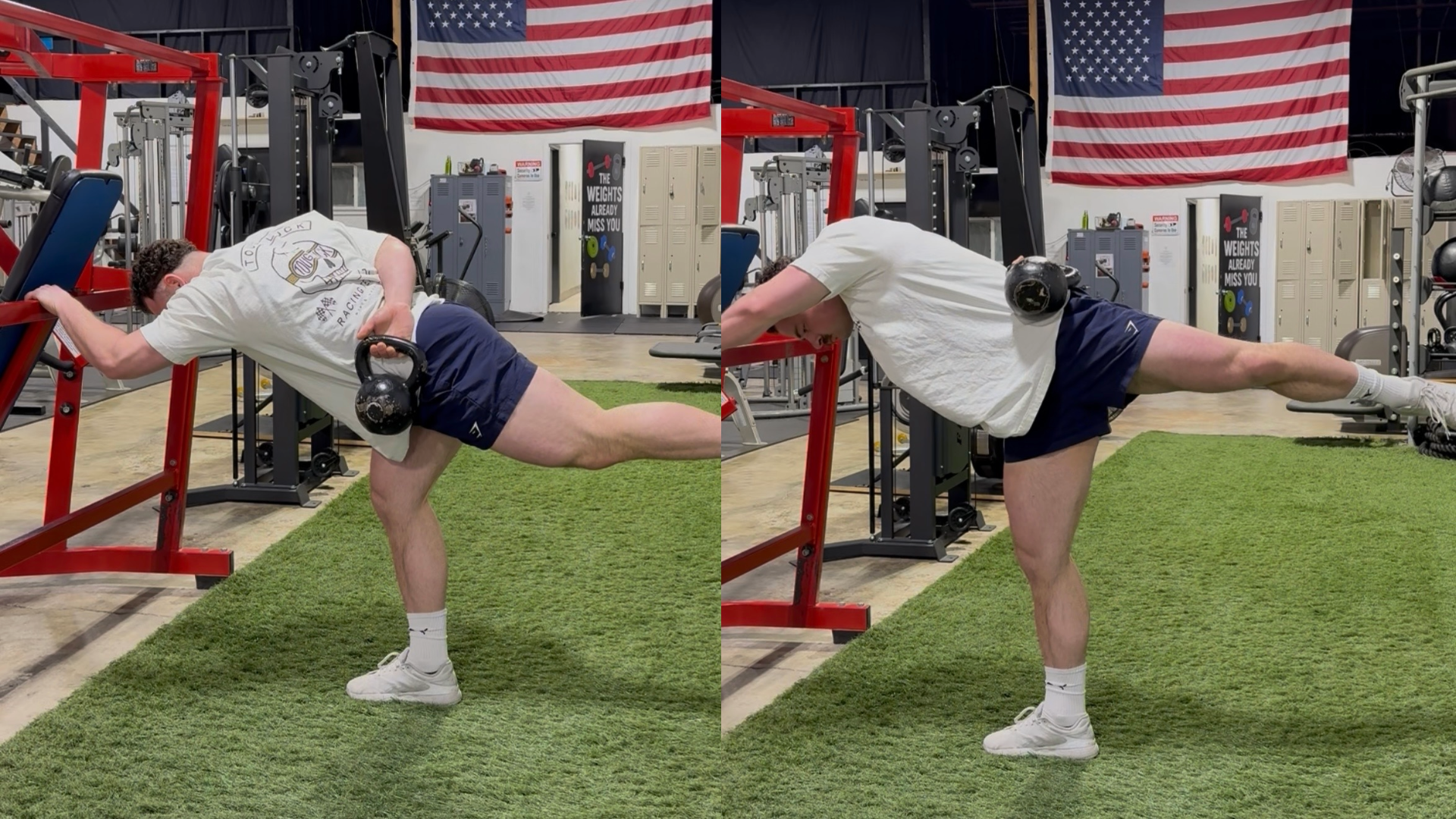
Glutes: the priority here is hip rotation, which is where the hip airplane comes in. This exercise rotates the pelvis over a fixed femur, so you're getting real hip rotation instead of the isolated internal rotation drills that get you nowhere. Start assisted, then add load.
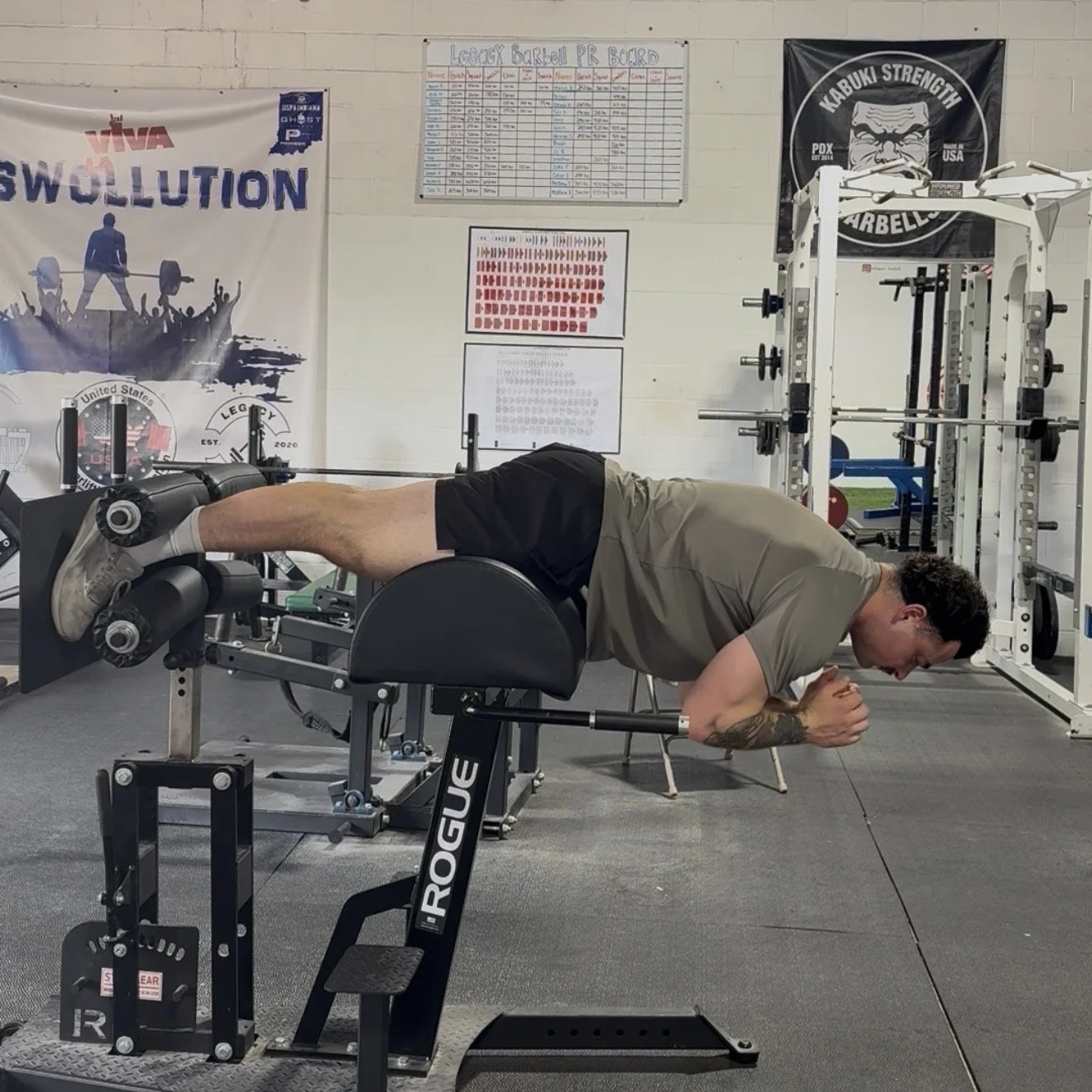
Erector spinae: these need to build load tolerance over time first, rather than jumping straight into something like heavy back extensions. Low back endurance is often the lowest-hanging fruit for reintroducing load. The GHD hip extension isometric is great for gradually loading the posterior chain. The isometric hold gives you a solid strength stimulus with a lot less flare-up risk, since your spine has to hold its shape while the glutes and hamstrings learn to keep you from folding over. I like 3-4 sets of 45 seconds, adding load as needed.
5. Common Mistakes
The most common mistake I see when lifters return to heavy deadlifts is getting too greedy. A lifter sees a big drop in pain and assumes they've healed. But go back to what I said about pathology and pain: it's not always that something needs to heal, it's that it wasn't being loaded properly in the first place. Take your time, celebrate the small wins, and you'll avoid the flare-ups.
The other mistake is inconsistency. If you get three sessions in one week and one session over the next two weeks combined, you don't have enough stimulus to adapt and progress. Rehab rewards the diligent. Slack off, and it won't work.
6. Sample Progression
Weeks 1-2: Increase step count
Weeks 3-4: Steps, core, isolate hamstrings and glutes
Weeks 5-6: Core, isolated hamstrings, glutes, and spinal erectors
Weeks 7-8: B-stance DB RDL, Sumo RDL, KB Deadlift
Weeks 9-10: Block pulls
Weeks 11-12: Deadlift
Every back is different, so treat this as a template, not a prescription.
7. Key Takeaways
Pain above 4/10 means back off the barbell. Sporadic pain doesn't mean you need to stop deadlifting altogether.
Your symptoms tell you whether you're dealing with a load problem, a movement problem, or both.
Start at a load and range of motion you can tolerate, then rebuild gradually. Don't wait to be pain-free before you start.
Progress one variation at a time instead of exercise-hopping.
If pain doesn't respond to smart programming, or you notice numbness, tingling, or weakness, get evaluated by a medical professional before continuing to load your spine.
If you're not sure how to build this kind of plan for your own training, this is exactly what I work through with the lifters I coach.
Fill out an application today: ausblakecoaching.com/apply-now